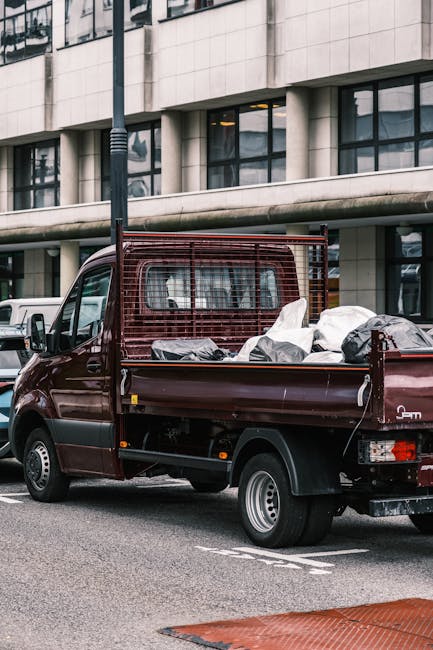
Rubbish pickup near Hanwell station for flats: a practical local guide
If you live in a flat near Hanwell station, rubbish has a habit of turning from a small inconvenience into a real nuisance. One bag becomes two, old furniture blocks the hallway, and before long you're wondering how on earth to move it all without upsetting neighbours, risking a fine, or spending your Saturday dragging things up and down stairs. That is exactly where Rubbish pickup near Hanwell station for flats becomes useful: a straightforward way to clear waste from properties with limited access, shared entrances, or no easy place for a skip.
This guide explains how it works, what tends to go wrong, which collection method suits different flat layouts, and what to check before you book. You'll also find a comparison table, a realistic example, and a checklist you can actually use. No fluff. Just the stuff that helps when the lift is tiny and the bin store is already full.
Table of Contents
- Why rubbish pickup near Hanwell station for flats matters
- How rubbish pickup near Hanwell station for flats works
- Key benefits and practical advantages
- Who this is for and when it makes sense
- Step-by-step guidance
- Expert tips for better results
- Common mistakes to avoid
- Tools, resources and recommendations
- Law, compliance, standards, or best practice
- Options, methods, or comparison table
- Case study or real-world example
- Practical checklist
- Conclusion
- Frequently asked questions
Why Rubbish pickup near Hanwell station for flats Matters
Flat living changes the rubbish equation. In a house, you can often wheel things out to the front path, leave bags in a side return, or stack a few items temporarily in the garden. In a flat, especially around a station area where space is tight and people come and go at all hours, that luxury usually does not exist.
The practical issue is access. Shared stairs, narrow hallways, controlled entry systems, parking restrictions, and limited loading space can all make ordinary waste removal awkward. Add in sofas, bed frames, broken wardrobes, old white goods, or refurbishment rubble, and you've got a job that needs more planning than a casual bin run.
It matters for another reason too: safety and neighbour relations. Bags left in a communal area can become trip hazards. Furniture left in a corridor can block fire escape routes. And let's face it, nobody wants to be the person whose old mattress sat in the lobby for three days. A proper pickup keeps the building tidy and avoids that slightly tense look from everyone else on the landing.
Expert summary: for flats near Hanwell station, the best rubbish pickup option is usually the one that matches your access, timing, and waste type-not simply the cheapest-looking one.
If you are comparing collection methods, it helps to understand broader household and mixed-waste support too. Services such as rubbish removal, man and van, and wait and load skip hire can be more practical than a traditional skip when space is tight.
How Rubbish pickup near Hanwell station for flats Works
In simple terms, a rubbish pickup service collects waste from your flat, communal area, or an agreed ground-floor access point and removes it for sorting, recycling, or disposal. The exact process depends on the size of the load and how easy it is to reach the waste.
For flats, the process often starts with a quick assessment. You describe the rubbish, the floor level, whether there is a lift, how far the vehicle can park from the entrance, and whether any bulky items need to be carried downstairs. That information matters more than people think. A compact collection van may be ideal for one building, while another property might need a crew and a larger vehicle. Same road, very different job.
Some collections are simple "load and go" visits. Others involve sorting items in advance, separating recyclables, or dismantling furniture before removal. If you only have a few items and can get them downstairs easily, a faster service may be enough. If you are clearing multiple rooms, a larger domestic clearance approach may be better, and it can be worth looking at domestic skip hire alongside collection options.
For busy people, timing is often the deciding factor. A collection booked for early morning can be easier if you want to avoid lift traffic, delivery vans, or the steady weekday shuffle of commuters around Hanwell station. Even a half-hour window can make the whole thing smoother. Sounds small, but it really does help.
What usually gets collected
- General household rubbish and bagged waste
- Bulky items such as sofas, wardrobes, and tables
- Mattresses and bed bases
- Appliances, depending on the service
- Mixed flat-clearance waste from downsizing or moving out
- Light DIY waste in small amounts
If your load includes anything unusual, check before collection. Items such as paint, solvents, pressurised containers, or certain electrical waste may need a different disposal route. The wrong assumption here can delay the pickup, which is never fun when you've already lugged half a wardrobe down two flights of stairs.
Key Benefits and Practical Advantages
The biggest benefit is obvious: you do not need to do the heavy lifting alone. But there are several other advantages that matter just as much in flat settings.
1. Less disruption to neighbours
A well-planned pickup keeps communal spaces clear for as little time as possible. That means fewer complaints, less clutter in shared hallways, and less risk of somebody else moving your items out of the way in a not-very-gentle fashion.
2. Better access handling
Flat blocks can be awkward. A pickup team used to working in London understands loading bays, timed access, entry phones, and the difference between "there is parking" and "there is parking if you are extremely lucky." That experience matters.
3. More suitable for urgent clear-outs
If you're moving out, preparing for a tenancy handover, or clearing a property after a last-minute change of plans, the speed of a pickup can be a genuine relief. In some cases, a same-day or next-day option is the difference between calm and chaos. For urgent jobs, see same day skip hire as a comparison point when the waste volume is too high for a simple pickup.
4. Better waste separation
Good providers do not just throw everything together. They tend to sort recyclable materials where possible, and that is preferable for both environmental and practical reasons. If sustainability matters to you-and for many residents it does-ask how the waste will be handled. Their recycling and sustainability approach should be easy to explain.
5. Lower stress for top-floor flats
Anyone who has carried a sofa down three floors knows why this matters. One item can feel manageable. Four items, not so much. A pickup service cuts that strain and saves a lot of awkward twisting at the bottom of the stairs.
Who This Is For and When It Makes Sense
This type of service suits a lot of real-life situations. It is not just for large clearances. In fact, many bookings are for modest jobs that simply do not fit flat life very well.
- Tenants moving out: useful when you need to clear leftover furniture or bin bags before checkout.
- Landlords and letting agents: ideal for fast resets between tenancies.
- Flat owners doing decluttering: handy when storage cupboards, balconies, or spare rooms have got out of hand.
- People replacing furniture: good for getting rid of the old sofa before the new one arrives.
- Households sharing a flat: helps when several people contribute rubbish and the pile grows mysteriously overnight.
- Residents with mobility limits: reduces the need to carry items downstairs.
It also makes sense when a standard skip would be inconvenient or impossible. In a station area, parking can be a headache, and in many flat blocks there is simply no legal, safe, or practical place to leave a skip. In those cases, a collection-first solution often wins.
For smaller or more flexible jobs, you might also compare options such as man and van or wait and load skip hire. They can be a neat fit when access is tight but the waste is not tiny.
Step-by-Step Guidance
Here is a practical way to organise rubbish pickup without turning it into a whole drama.
- Sort the waste into clear groups. Separate general rubbish, bulky items, recyclables, electricals, and anything possibly hazardous. You do not need museum-level precision, but some order helps.
- Estimate the volume honestly. A "couple of bags" can become ten bags if you are clearing the cupboard under the sink. Be generous with your estimate.
- Check access details. Note the floor level, lift availability, parking restrictions, entry codes, and whether there is a loading bay. If the vehicle cannot stop nearby, say so early.
- Measure bulky items. Sofas, wardrobes, mattresses, and appliances can be awkward through communal doors. A quick measurement avoids surprises.
- Ask what is accepted. Not every service takes the same items. If you have a fridge, a mattress, or mixed waste, confirm in advance. Useful background is available on fridge and appliance removal and mattress and sofa disposal.
- Choose the best time slot. Early morning or mid-week can reduce building traffic. If your block gets busy, timing is more important than price, to be fair.
- Keep the route clear. Move shoes, plant pots, bikes, or other items out of the way so the team can work safely.
- Confirm what happens after collection. Ask whether the waste is recycled, reused, or sent for disposal, and whether you need paperwork for anything specific.
A quick example: if you live on the fourth floor and want to clear a broken wardrobe, two dining chairs, and six bags of mixed waste, you may be better off booking a flexible collection rather than trying to organise a skip. The access overhead is simply lower, and the whole thing is usually more efficient.
Expert Tips for Better Results
These are the small details that tend to make the difference between a smooth pickup and a slightly messy one.
- Take a photo of the waste before booking. It helps avoid confusion, especially if you are dealing with mixed items or bulky furniture.
- Disassemble large items where practical. A flat-pack wardrobe in pieces is easier to move than one giant lump in the hallway. Obvious, but worth saying.
- Use sturdy bags and tape up loose ends. Flimsy bags split, and nobody likes a trail of mystery debris on the stairwell.
- Protect shared areas. If the route is tight, put down cardboard or old sheets if appropriate.
- Keep valuables and documents separate. Once rubbish is going out, it should really be rubbish.
- Ask about loading time. If the team needs to carry everything down several flights, that can affect scheduling.
- Plan around neighbours. School runs, delivery windows, and evening quiet hours all matter in a block. A little consideration goes a long way.
One practical note: if your rubbish includes paperwork, tablets, hard drives, or anything confidential, do not just put it in a bin bag. Services such as confidential shredding are there for a reason, and they save a lot of second-guessing later.
And yes, the odd sock always turns up in a clear-out. Nobody knows why.
Common Mistakes to Avoid
Most pickup problems are avoidable. The same few mistakes crop up again and again.
Underestimating the amount of waste
This is the classic one. People book for a small pile, then discover half a cupboard, some old under-bed storage, and three bags of "I'll deal with that later" items. Later arrives all at once.
Forgetting access restrictions
Not mentioning a locked gate, a lift that is out of service, or a no-parking zone near the entrance can slow everything down. Be blunt about access. It saves time.
Mixing restricted items with general rubbish
Paint tins, chemicals, gas canisters, and some electrical waste usually need special handling. If you mix them into a general load, the collection may be refused or delayed.
Leaving items in communal areas too long
It is tempting to put bags by the door "just for now". In a flat, just for now can become three days. That is where complaints begin.
Not checking building rules
Some blocks have rules around loading, timings, or use of shared entrances. If you rent, your managing agent or landlord may also have preferences. A five-minute check can prevent a very annoying phone call.
Choosing a method that does not suit the site
A skip may be great on a driveway. It is not always great outside a flat by a station. Likewise, a tiny van may not suit a full flat clearance. Matching method to access is the real trick.
Tools, Resources and Recommendations
You do not need much equipment, but the right few tools make the process easier.
- Strong rubble sacks or refuse bags: better than thin supermarket bags that split halfway down the stairs.
- Tape measure: useful for confirming furniture dimensions.
- Labels or marker pens: handy if you are sorting mixed waste across several rooms.
- Gloves and basic protective wear: sensible when handling sharp or dusty items.
- Furniture tools: a screwdriver or Allen key can help dismantle beds or wardrobes.
- Phone camera: useful for sharing access photos and waste images before collection.
For planning and comparison, these pages are often the most useful starting points: skip sizes and prices, what can go in a skip, and pricing and quotes. If you are weighing pickup against a larger load solution, you may also want to look at grab hire services and grab lorry hire.
If you are clearing more than one type of waste, it may also be sensible to read about house clearance or garage and loft clearance, even if you live in a flat. The overlap is more useful than it first appears.
Law, Compliance, Standards, or Best Practice
For rubbish pickup in the UK, the main thing to remember is simple: waste should be handled responsibly, and you should use a provider that follows proper disposal and recycling practices. If a service seems oddly vague about where the waste goes, that is not a great sign.
For flat residents, best practice usually means:
- Keeping shared areas clear and safe
- Not blocking fire exits or stairwells
- Separating hazardous or specialist waste from general rubbish
- Booking collections that match the property's access constraints
- Using a provider that can explain disposal and recycling clearly
If you are generating waste from refurbishment, building work, or strip-out tasks in a flat, you may need to think more carefully about sorting and handling. Relevant service information includes builders waste removal, construction waste disposal, and construction waste clearance.
For more sensitive materials, like electronics or confidential paperwork, separate handling is the safer route. For bulky waste, a controlled approach is better than leaving items in a corridor and hoping for the best. Truth be told, "hope for the best" is not a great waste strategy.
Always check the service terms before booking. The pages on terms and conditions, health and safety policy, insurance and safety, and payment and security can help set expectations before you commit.
Options, Methods, or Comparison Table
If you are deciding how to clear rubbish from a flat near Hanwell station, the main question is not "what is the best service in theory?" It is "what works best for my building, my schedule, and my waste type?" Here is a simple comparison.
| Method | Best for | Pros | Watch-outs |
|---|---|---|---|
| Rubbish pickup / man and van | Bulky items, mixed household waste, small to medium flat clear-outs | Flexible, fast, good for tight access | Needs accurate access details; may not suit very large loads |
| Wait and load | Locations with short-term parking access | No skip left on the road; efficient if loading is quick | Time pressure if items are not ready |
| Skip hire | Regular renovation waste or bigger loads | Handy when you can place a skip safely nearby | May need a permit; often awkward for flats |
| Grab hire | Large mixed loads, heavier waste, accessible ground-level collection | Efficient for bigger volumes | Needs access space and sensible pile location |
| Domestic skip hire | Home clear-outs where a skip can be positioned | Good for structured projects | Less convenient in dense flat blocks |
For many flats, the sweet spot is either a pickup-led service or a wait-and-load approach. A skip can still make sense in some cases, but not if the road is tight, the entrance is awkward, or the building manager is already giving you that look. If you do need a skip, look into skip hire and skip hire permits before you assume it will be simple.
Case Study or Real-World Example
Here's a realistic example. A tenant in a second-floor flat near Hanwell station is moving out at short notice. The flat has a narrow stairwell, no lift, and a decent amount of leftover stuff: a disassembled bed frame, a mattress, four bin bags, a small coffee table, and an old chair. There is no private outdoor space, and the street outside is busy around commuter hours.
Trying to stage a skip would be awkward. It would likely need permission, and the access would still be clumsy. Instead, the tenant arranges a rubbish pickup with the waste already grouped in one room. The night before, they measure the larger items, clear a route through the hallway, and remove anything they want to keep. On collection day, the crew comes during a quieter morning slot, loads everything efficiently, and clears the flat without disturbing the whole building.
The result is not glamorous, but it is exactly what the job needed: no blocked corridor, no last-minute panic, and no wasted afternoon trying to recruit friends with "you owe me one" energy. That part alone is worth a lot.
Practical Checklist
Use this quick checklist before you book rubbish pickup near Hanwell station for flats.
- List every item that needs removing
- Estimate how much space the waste will take
- Check if the flat has a lift or only stairs
- Confirm parking, entry, and loading access
- Measure bulky furniture and appliances
- Separate hazardous or restricted items
- Ask whether recycling is included
- Choose a collection time that suits building traffic
- Clear the route from the flat to the exit
- Review the provider's terms, payment, and safety information
If you want a deeper look at service standards and company background, pages like about us and recycling and sustainability are worth a read before you decide.
Conclusion
Rubbish pickup near Hanwell station for flats is really about fit. Fit for access, fit for timing, and fit for the type of waste you have. When those pieces line up, the whole process becomes much easier than people expect. When they do not, even a small clear-out can become a frustrating slog.
The best approach is usually the most practical one: be accurate about your waste, honest about access, and realistic about what your building can handle. That way you avoid delays, reduce stress, and keep shared spaces tidy. And if you are still deciding between pickup, skip hire, or a load-and-go method, compare them against the reality of your flat rather than the brochure version. That's the trick, really.
Get a free quote today and see how much you can save.
Sometimes the smallest bit of planning makes the biggest difference. A calm clear-out is a lovely thing, even if it starts with a pile of old boxes by the door.
Frequently Asked Questions
What is the best rubbish pickup option for a flat near Hanwell station?
For most flats, the best option is the one that matches your access and waste volume. If you have stairs, limited parking, or bulky items, a flexible rubbish pickup or man and van style collection is often easier than trying to manage a skip.
Can rubbish be collected from a top-floor flat?
Yes, in many cases it can. You just need to be clear about the floor level, lift access, and how far the crew will need to carry items. That information affects timing and the type of service that is most suitable.
Do I need to sort rubbish before pickup?
It helps a lot. You do not need to sort everything perfectly, but separating bulky items, general waste, recyclables, and restricted waste makes the pickup quicker and reduces the chance of problems on the day.
Can old sofas and mattresses be taken away?
Usually yes, provided the provider accepts them. It is wise to confirm mattress and sofa disposal in advance because large upholstered items can sometimes need specific handling.
What happens if my flat does not have parking nearby?
That is common in station areas. Some services can still work with a short walk from the vehicle, but you should mention the distance before booking. If access is very awkward, wait and load or a van-based pickup may be the better fit.
Is rubbish pickup better than skip hire for flats?
Often, yes. Skip hire can be awkward for flat blocks because of parking, permits, and space. Pickup is usually easier when you do not have a driveway or a suitable spot for a skip.
Can you take broken appliances like fridges or washing machines?
Often you can, but these items may need separate handling. Fridge and appliance removal is worth checking specifically because white goods are not always treated like ordinary rubbish.
How do I avoid upsetting neighbours during collection?
Choose a sensible time slot, keep communal areas clear, and avoid leaving rubbish in corridors for long periods. A little care goes a long way in a shared building.
Are there items that cannot go in a normal rubbish pickup?
Yes. Hazardous items, certain chemicals, and some electrical or specialist waste may need a different service. If in doubt, ask before collection rather than guessing and hoping it is fine.
How quickly can rubbish be picked up near Hanwell station?
It depends on the provider and the size of the load. Some jobs can be handled quickly, especially if the waste is already ready to go. Urgent bookings may be possible, but it helps to plan ahead where you can.
Should I choose rubbish removal or a skip for a flat clear-out?
If access is tight, rubbish removal is usually easier. If you have a larger load and a suitable place for a skip, then skip hire may be better. It comes down to access, volume, and how long you need the waste on site.
Where can I get more information before booking?
Useful starting points include pricing and quotes, what can go in a skip, and contact us if you want to ask about a specific flat or access setup.